

Hourly Matching
Promotion Council
Hourly Matching
Promotion Council
Hourly Matching Promotion Council
Top Story
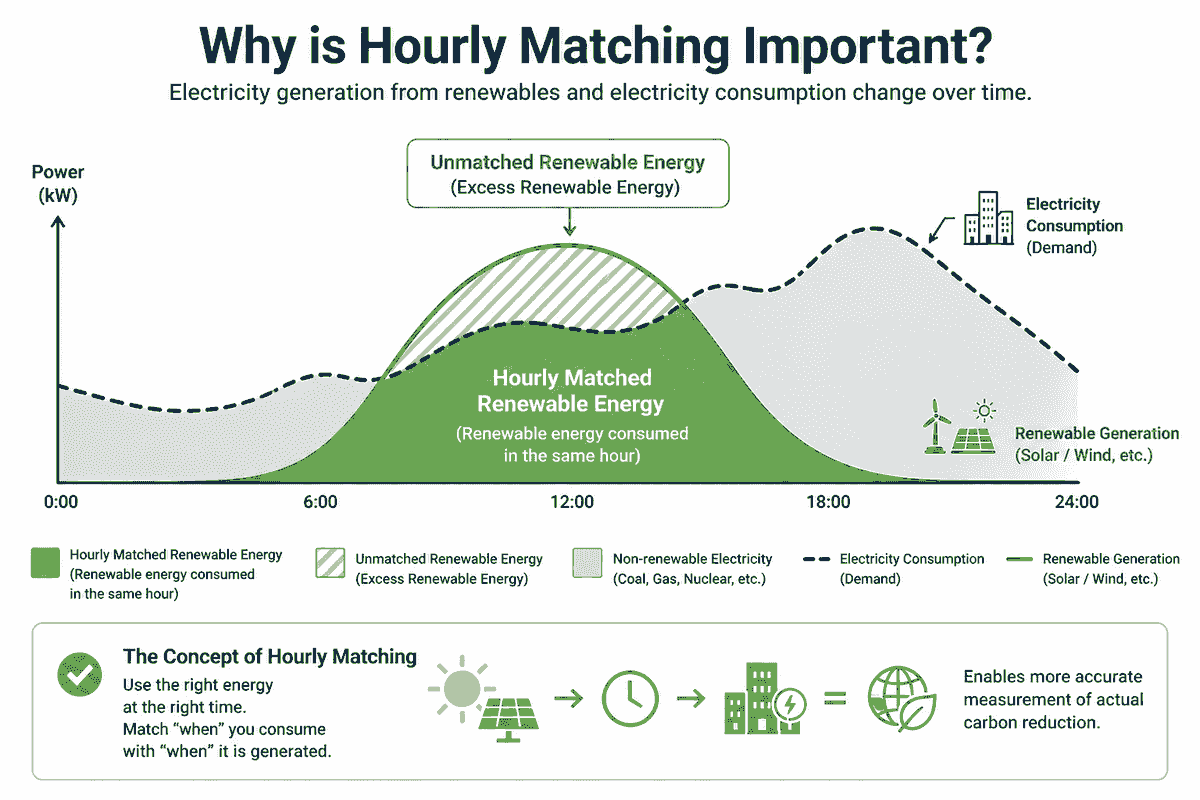
From Annual Matching to Real-Time Decarbonization: Why Hourly Matching Matters?
As electricity systems evolve, the way we measure decarbonization is undergoing a fundamental shift. Traditional approaches—based on annual matching of renewable energy—are no longer sufficient in a world where solar dominates daytime generation and fossil fuels still fill the gaps at night.
This article explores the emerging concept of hourly matching, which aligns electricity consumption with renewable generation in real time, offering a far more accurate reflection of actual emissions. It explains the structural drivers behind this shift, from renewable penetration to digitalization, and highlights how evolving Scope 2 standards and global initiatives are reshaping both markets and corporate strategies.
By understanding hourly matching, readers will gain insight into the next frontier of energy systems—where time, not just volume, defines the true value of clean electricity.
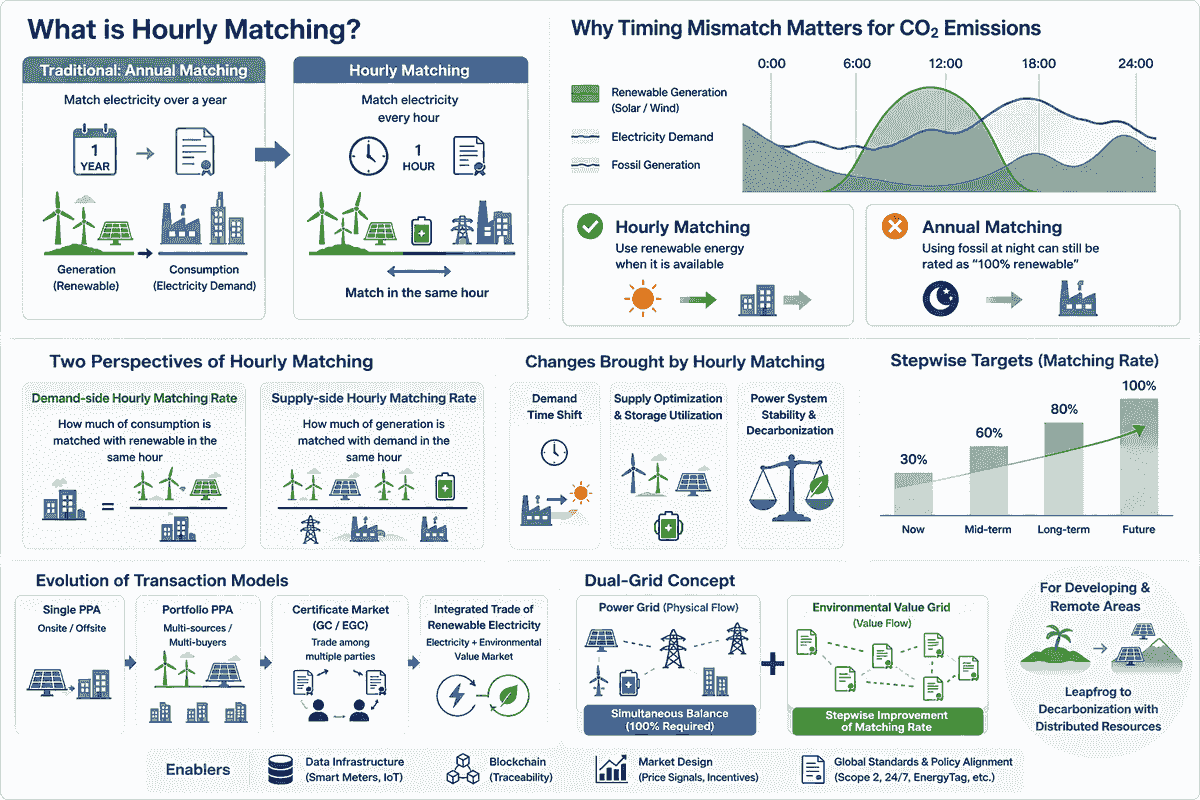
Unlocking Carbon Value: New Business Models for Grid-Scale Batteries in the Hourly Matching Era
As hourly matching reshapes electricity markets, grid-scale batteries are evolving beyond traditional energy arbitrage into a new frontier of carbon value optimization. No longer limited to buying low and selling high in power markets, batteries can now capture time-based environmental value by shifting renewable energy—and its associated carbon attribute
This article explores how emerging mechanisms such as granular certificates (GCEACs), emissions intensity differentials, and hybrid PPA structures are enabling entirely new revenue streams. It also highlights the growing importance of market rules, standardization efforts led by EnergyTag, and advanced system configurations that integrate storage with renewable portfolios.
In this new paradigm, batteries are not just balancing supply and demand—they are becoming core players in aligning electricity, carbon accounting, and market value in time.
Case Study: Advancing Half-Hourly Matching for EV Charging in Japan
This case study highlights a pioneering project in Japan that brings the concept of hourly matching into real-world application. Led by D-Sharing Co., Ltd. under a Ministry of the Environment program, the initiative demonstrates how distributed community solar can be matched with EV daytime charging on a half-hourly basis using granular certif
By integrating smart meter data, a P2P trading platform, and behavioral insights, the project enabled time-aligned transactions between local solar prosumers and EV users. It represents one of the first government-backed implementations of time-resolved matching in Japan, offering valuable insights into technical feasibility, economic scalability, and future policy design.
As interest in granular energy markets grows globally, this project provides a concrete example of how hourly matching can move from concept to system-level deployment.
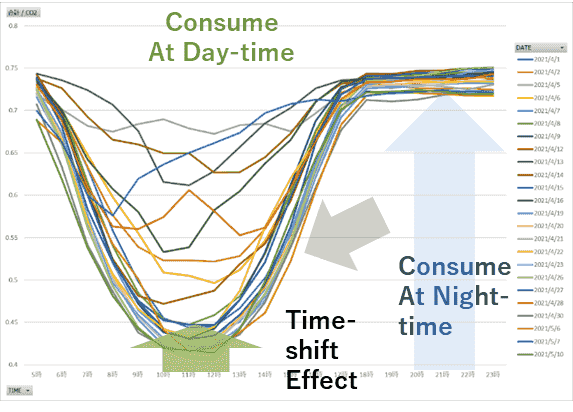
Shift to Daytime Power Use: Rethinking Scope 2 with Hourly Matching
As Scope 2 accounting evolves, the focus is shifting from annual averages to time-based emissions tracking. This article explores how hourly emission factors reshape the way companies understand and manage electricity-related CO₂.
By introducing concepts such as consumer carbon intensity and daytime load shifting, it highlights how operational decisions—not just procurement—can drive measurable emissions reductions. The piece also clarifies the complementary roles of location-based metrics and hourly matching, offering a practical framework for integrating behavioral change into decarbonization strategies.
In a system increasingly defined by renewable variability, the question is no longer just how much energy you use—but when you use it.
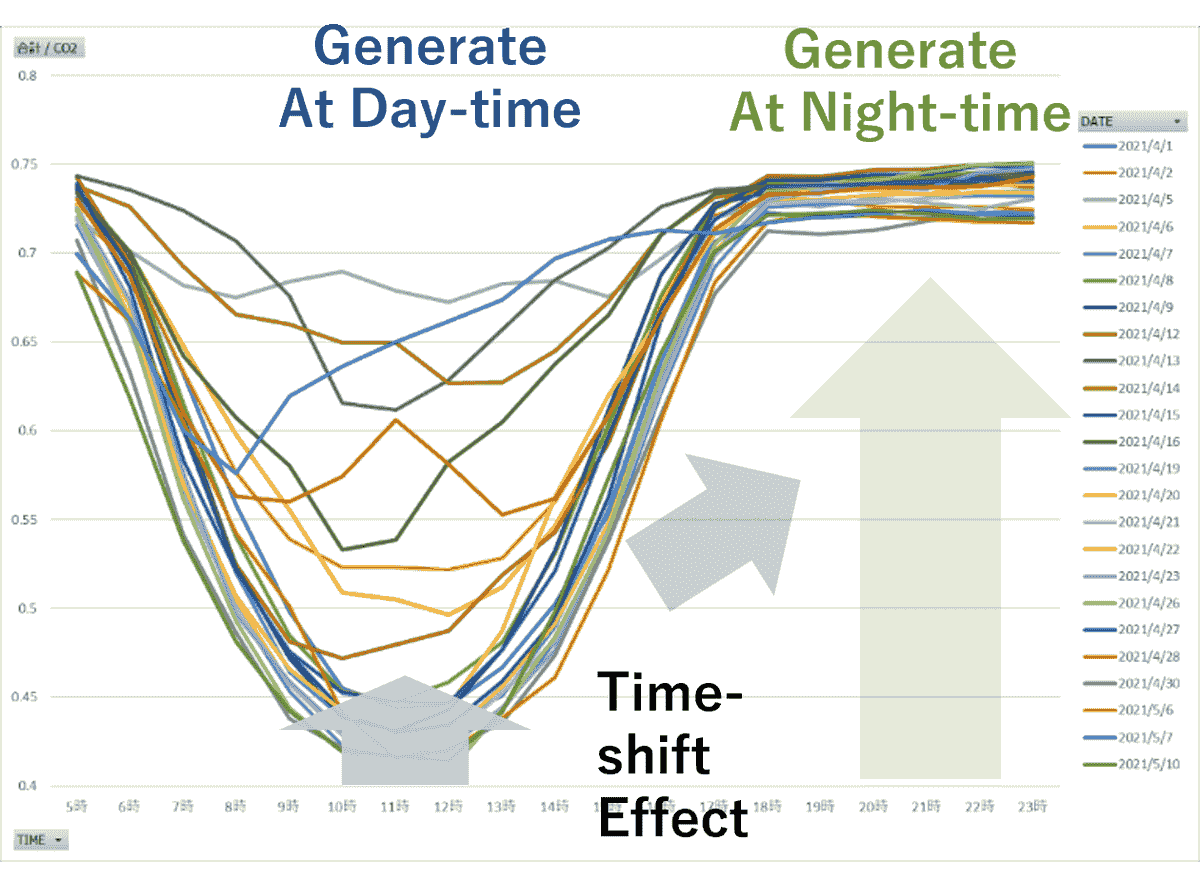
Maximizing Renewable Value in the Hourly Matching Era
As electricity markets evolve toward time-based carbon accounting, the economics of renewable energy are undergoing a fundamental transformation. No longer defined solely by generation volume, value is increasingly shaped by *when* energy is delivered.
This article explores how hourly matching reshapes price formation, why storage and dispatchable renewables gain strategic importance, and introduces the concept of the Supplier Emission Avoidance Factor as a new metric for value optimization.
By aligning generation timing with periods of high carbon intensity, renewable suppliers can unlock new revenue streams and enhance system-level decarbonization impact. The piece provides a forward-looking framework for navigating this emerging market paradigm.
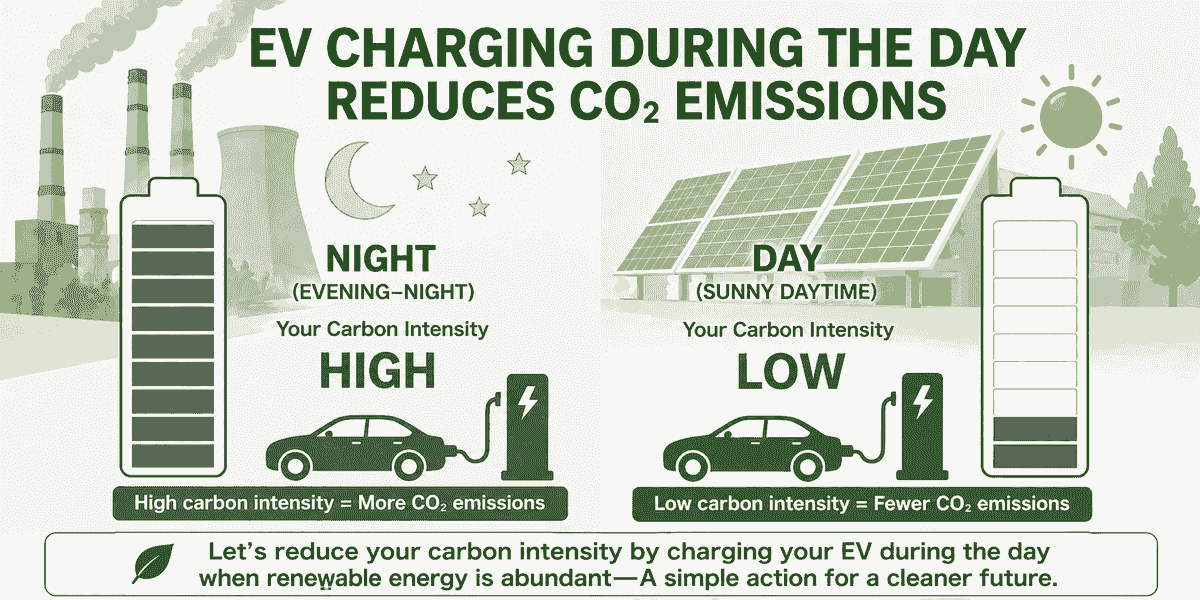
Daytime Charging Policy and the Power of Hourly Matching
South Korea’s recent push to shift electricity use to daytime hours highlights a growing challenge in energy transition: how to turn policy signals into real behavioral change. While the goal—reducing LNG dependence by aligning demand with renewable supply—is clear, public response reveals the limits of top-down guidance without clear, quantitative insight.
This article explores how hourly matching and time-based emission factors can bridge that gap. Drawing on both Korean policy and Japanese pilot results, it shows how real-time carbon visibility and simple incentives can significantly shift consumer behavior—transforming abstract decarbonization goals into practical, everyday action.


